UT combines the page layout of HOQz (Haǧǧ Ḥāfiẓ ʿUṯmān Ḫalīfa QayišZāde an-Nūrī al-Burdurī = Küҫük Hafiz Osman = HO the Younger d. 1894) with the text of KFE2 (1952) without the afterword.
The Ḥaddād-Šamarlī combined the layout of MNQ 522 with the same 1952 text (including the afterword).
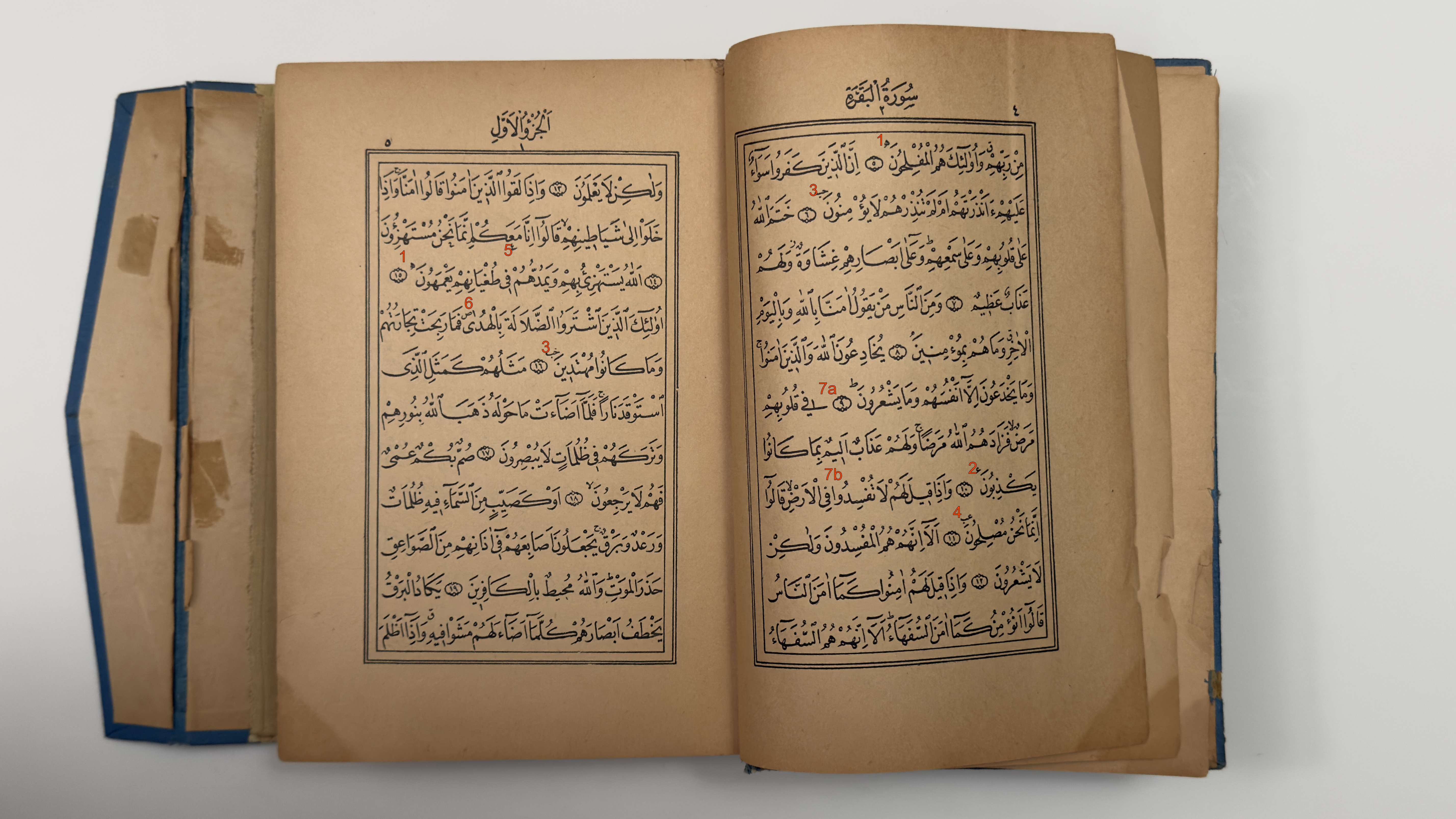
KFE1 (1924) crosses many Moroccan features with the eleven/twelve lines of BHO = Bülük Ḥafiẓ Osman = HO the ElderHâfız Osman (1642–1698)


you forget that the KFE was type set.
Just as the type set "child" of MNQ522 has 525 pages,
the child of BHO 815 has a few pages more.
Both a scribe and modern (!) IT can modify letter, connection and space between words to copy the page layout exactely,
metall type can not achieve justified lines exactly as in the handwritten "parent".
I critize German orientalists for largely ignoring India, Indonesian, and Africa.
They ignore Central Asia, Iran, Turkey too ‒ even the Levant and Mesopotamia.
They treat Egypt (now: pus Madina) as THE Musim world.
Many believe: the KFE has changed everything for all muslims.
Yes, after 1924 the Amiriyya stopped reprinting maṣāḥif in the Ottoman spelling
and in Egypt, private publisher mostly switched to it too ‒ some kept the old spelling, both as base text with a tafsīr around, and for Qurʾān only.
Some know that in 1951 the ʿIrāqī state published a revisted Ottoman manuscript;
few know that it published another non berKenar muṣḥaf on 689 pages, written by Ḥasan Riḍā
Here together with with it as base text for a Turkish translation


As usual there was no title; but: the kolophon was prominent




‒


